


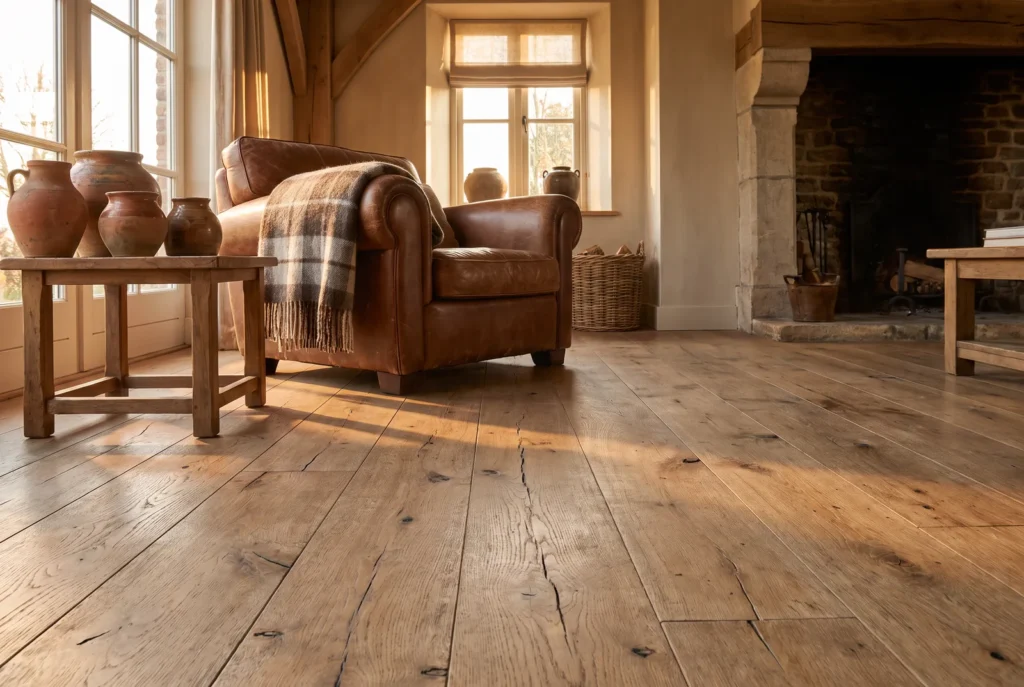
The short answer: a floor's grade says nothing about manufacturing quality. It describes the look of the wood: knots, sapwood, colour variation. A Rustic oak leaves the same factory as a Prime board — it simply has more to say, for a gentler budget.
Raw, brushed, aged: what do these words mean?
Three words you see everywhere, three different ideas:
- Raw (unfinished): the wood arrives with no finish. No oil, no lacquer — you (or your fitter) choose the tint and protection after installation. Maximum freedom, one extra step to plan.
- Brushed: the grain is opened with a wire brush. The relief catches the light and hides everyday micro-scratches.
- Aged: the surface is worked to give new wood an antique patina — much in demand with rustic grades.
Oak grades, from calmest to boldest
| Grade | Knots | Sapwood | Style |
|---|---|---|---|
| Prime AB | rare and small | none | clean, contemporary |
| Classic | present, moderate | very limited | warm, balanced |
| Rustic | bold, filled | possible | authentic, lively |
| Heavy Rustic / Extra rustic | numerous, pronounced | embraced | maximum character, country spirit |
Knots in rustic grades are filled and stabilised at the factory: they are part of the design, not defects.
Why rustic is often the smart choice
- Same oak, same manufacturing: only the aesthetic selection changes — and the price per m² follows.
- It lives well: a floor with bold figuring forgives everyday marks better than a flawless surface.
- It suits the times: natural interiors, family-home spirit, honest patinas.
Our rustic selection in stock gathers Classic, Rustic and Heavy Rustic grades, engineered as well as solid wood — most of it ships from our stock in Belgium (BE-01), deliverable within days.
Which grade for which project?
- Classic apartment, chevron or herringbone pattern: Classic — the pattern stays legible.
- Family living space: brushed Rustic, oiled or matt lacquered.
- Country house, farmhouse, loft: oiled Heavy Rustic, wide planks.
- A project to tint on site: raw solid oak, finished after installation.
The species matters too: see European or American oak.
Three mistakes to avoid
- Judging from a single board. A grade is an average: always ask for several board photos, or a sample box.
- Confusing grade with quality. A well-made Heavy Rustic will last as long as a Prime — it is the same wood.
- Forgetting the finish on raw wood. Oil or lacquer after installation: budget for the product and a day's work.
Frequently asked questions
Is a rustic floor less durable?
No. Wear depends on the species, the wear-layer thickness and the finish — not on the number of knots. See also use classes.
Can rustic grades be laid in chevron?
Yes. But the wood's figuring competes with the laying pattern: in chevron, many prefer Classic; on wide straight planks, Rustic comes into its own.
Raw or factory-finished?
Factory-finished: install and move in. Raw: exactly the tint you want, but one more step. In an occupied home, factory finishes avoid odours and drying time.